The Ultimate Guide to Lion’s Mane for Focus: Dosage, Benefits, and What to Expect
In an increasingly demanding world, maintaining a sharp mind and unwavering focus has become a premium. We’re constantly bombarded with information, distractions, and the pressure to perform at our peak. This relentless pursuit of cognitive enhancement has led many to explore natural solutions, and among them, the humble mushroom has emerged as a surprising hero. Specifically, Lion’s Mane mushroom (Hericium erinaceus) is taking the wellness world by storm as a leading contender in the realm of “mushroom nootropics,” touted by many as the “best mushroom for focus.”
This comprehensive guide will delve into the profound “lion’s mane benefits” for your brain, demystify the ideal “lion’s mane dosage,” and set clear expectations for “what to expect” when integrating this powerful fungus into your “cognitive support supplements” regimen.
Unlocking Cognitive Potential: The Rise of Mushroom Nootropics

The concept of nootropics – substances that safely enhance cognitive function – has gained significant traction as individuals seek to optimize mental performance. While synthetic compounds have their place, there’s a growing appreciation for nature’s intelligence. Functional mushrooms, with their rich history in traditional medicine and burgeoning scientific backing, are at the forefront of this natural nootropic movement.
Lion’s Mane stands out for its unique ability to support brain health and function, particularly concerning focus, memory, and mental clarity. Unlike stimulants that offer a temporary surge followed by a crash, Lion’s Mane is celebrated for promoting sustained cognitive enhancement and long-term neural health.
What is Lion’s Mane Mushroom? A Natural Brain Booster
Before diving into its nootropic properties, let’s get acquainted with this fascinating fungus.
A Glimpse into its History and Appearance
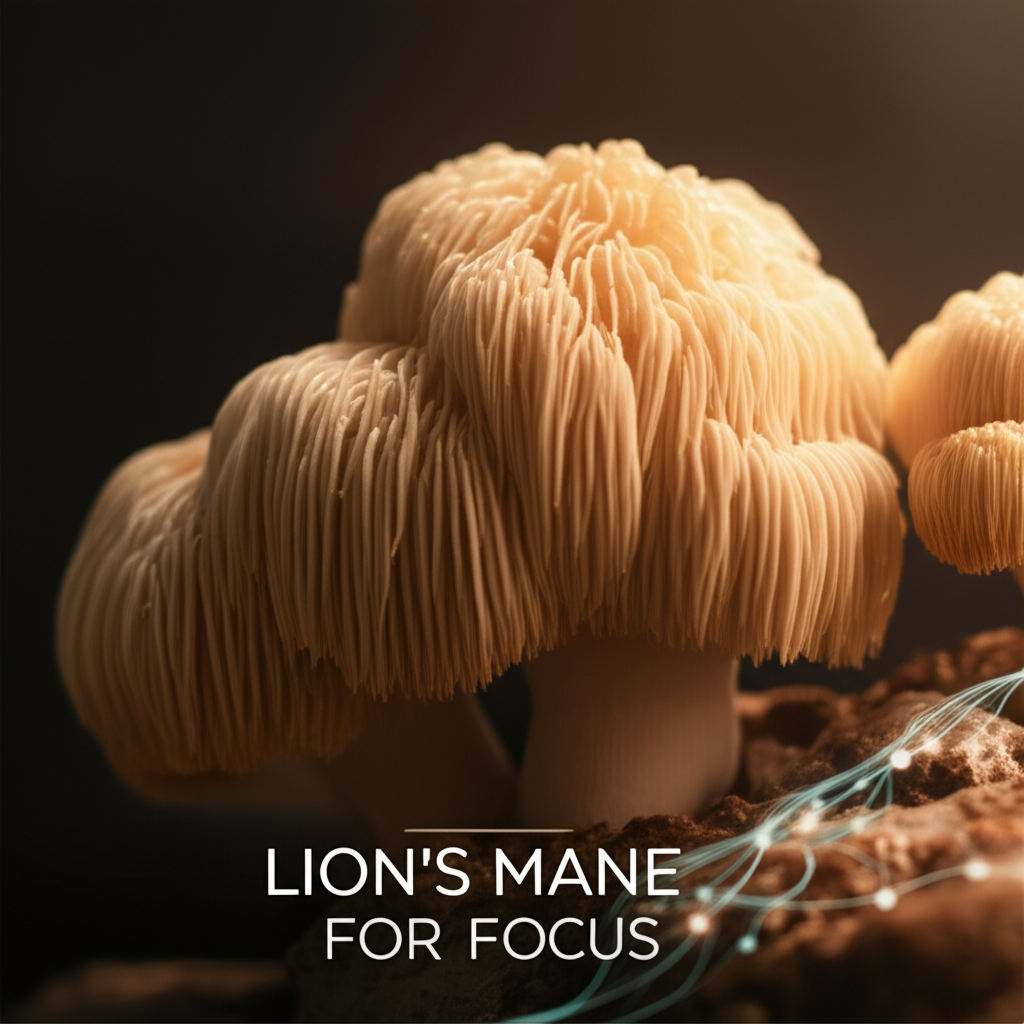
Hericium erinaceus, commonly known as Lion’s Mane, is a distinctive looking mushroom characterized by its long, shaggy, white spines that resemble a cascading waterfall or, indeed, a lion’s mane. Native to North America, Europe, and Asia, it typically grows on hardwood trees.
For centuries, Lion’s Mane has been a revered ingredient in Traditional Chinese Medicine (TCM) and Japanese traditional medicine, where it was used not only as a culinary delicacy but also for its profound medicinal properties, particularly for digestive health and cognitive support. Buddhist monks reportedly used it to enhance focus during meditation.
The “Smart Mushroom” Status
Today, modern science is catching up with ancient wisdom, revealing why Lion’s Mane holds such promise as a “cognitive support supplement.” Its unique bioactive compounds contribute to its reputation as a “smart mushroom,” capable of offering profound benefits for mental acuity and overall brain health.
The Science Behind Lion’s Mane and Laser-Sharp Focus
The primary reason Lion’s Mane is considered the “best mushroom for focus” lies in its remarkable ability to interact with and support the intricate machinery of the human brain.
Fueling Neurogenesis with Nerve Growth Factor (NGF)
One of the most exciting aspects of Lion’s Mane is its potential to stimulate the production of Nerve Growth Factor (NGF). NGF is a crucial protein that plays a vital role in the growth, maintenance, and survival of neurons (brain cells). It’s essential for neurogenesis – the process of generating new brain cells – and for brain plasticity, which is the brain’s ability to adapt and form new connections.
Lion’s Mane contains specific compounds called hericenones (found predominantly in the fruiting body) and erinacines (found primarily in the mycelium). These unique compounds are believed to cross the blood-brain barrier and directly stimulate NGF synthesis in the brain. By boosting NGF, Lion’s Mane helps:
- Promote the growth and repair of nerve cells: This means a healthier, more robust neural network.
- Enhance synaptic plasticity: The ability of synapses (connections between neurons) to strengthen or weaken over time, which is fundamental to learning and memory.
- Support myelination: The formation of the myelin sheath around nerve fibers, allowing for faster and more efficient transmission of nerve impulses.
Improved neurogenesis and neural health lay the groundwork for enhanced learning, better memory recall, and, crucially, a significantly improved ability to sustain attention and focus on tasks.
Enhancing Neural Communication
Beyond NGF, the compounds in Lion’s Mane are thought to facilitate more efficient communication between brain cells. Faster and clearer neural signals translate directly into quicker processing speeds, improved reaction times, and the ability to maintain a coherent thought process, all vital components of sharp focus.
Protecting Your Brain from the Inside Out
The brain is highly susceptible to oxidative stress and inflammation, which can impair cognitive function and lead to “brain fog.” Lion’s Mane is rich in powerful antioxidants and possesses anti-inflammatory properties that help protect brain cells from damage.
- Antioxidant properties: Lion’s Mane helps neutralize free radicals, unstable molecules that can damage cells and contribute to cognitive decline.
- Anti-inflammatory effects: By reducing neuroinflammation, Lion’s Mane creates a healthier environment for brain cells to function optimally, directly supporting clearer thinking and sustained focus.
These protective mechanisms contribute to the overall resilience of the brain, ensuring it can operate at its best, free from the hindrances of cellular stress and inflammation.
Unpacking the “Lion’s Mane Benefits” for Your Brain
The scientific mechanisms translate into tangible benefits for cognitive performance, making Lion’s Mane a powerhouse for anyone looking to sharpen their mind.
Sharpening Mental Clarity and Reducing Brain Fog
One of the most commonly reported “lion’s mane benefits” is a noticeable reduction in “brain fog.” Many users describe feeling a lift in mental cloudiness, leading to greater clarity of thought. This can manifest as improved decision-making, quicker problem-solving abilities, and a general sense of being more “on point.” For instance, professionals often